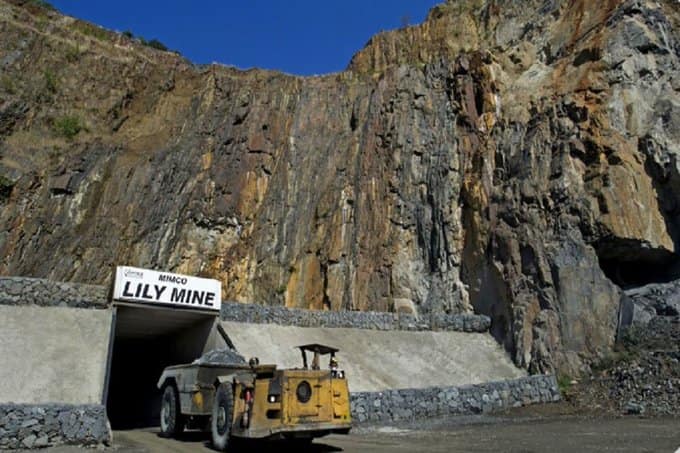
In a move that amplifies their eight-year struggle for justice and closure, the families of the three workers still entombed in the collapsed Lily Mine have lodged a formal, detailed complaint with the South African Human Rights Commission (SAHRC). The complaint represents a decisive shift from protest to legal action, directly accusing key government departments of systemic failure and the violation of their fundamental human rights.
The tragedy, which occurred on 5 February 2016, saw the mine’s lamp room container, where Pretty Nkambule, Solomon Nyirenda, and Yvonne Mnisi were working, plunge 80 metres underground when a crown pillar collapsed. While their bodies have never been recovered, the mine’s owner, Vantage Goldfields, and successive government administrations have been locked in a protracted battle with the families over retrieval operations, compensation, and accountability.
The Core of the Complaint: State Failure as a Rights Violation
The families, supported by the humanitarian organization, Right to Mourn, argue that the conduct of the state has transgressed several clauses of the Bill of Rights. Their complaint specifically cites:
- The Right to Human Dignity: The families contend that the state’s failure to ensure the dignified recovery of their loved ones’ remains—leaving them in what they call an “industrial tomb”—is a profound and ongoing assault on their dignity and the dignity of the deceased.
- The Right to Life and Bodily Integrity: The complaint argues that the Department of Mineral Resources and Energy (DMRE) failed in its constitutional and statutory duty to ensure mine safety, leading to the unlawful deprivation of life. It further accuses the department of negligence in its oversight role prior to the disaster.
- The Right to Access to Justice and Administrative Action: The families highlight an eight-year cycle of unfulfilled promises, stalled negotiations, and bureaucratic inertia involving the DMRE, the Department of Employment and Labour, and the Mpumalanga provincial government. They argue this constitutes unreasonable delay and a failure to provide effective redress, violating their right to have their grievance heard and resolved.
- The Rights of Children and Families: The complaint details the psychological trauma inflicted on the children and spouses of the victims, who have been deprived of both their loved ones and the financial support they provided, with inadequate psychosocial or state-sponsored support.
Pointing Fingers: Named Departments in the Firing Line
The 45-page complaint, seen by our news desk, explicitly names the Department of Mineral Resources and Energy (DMRE), the Department of Employment and Labour, and the Mpumalanga Provincial Government as primary respondents. It alleges these bodies collectively failed to:
- Enforce rigorous safety compliance before the collapse.
- Expedite and oversee a credible, fully-funded recovery operation.
- Ensure the provision of equitable compensation to the families.
- Facilitate transparent and timely communication or mediation.
“For eight years, we have been passed from one government office to another, from one empty promise to the next,” said a spokesperson for the families. “Our mothers, father, sister, and brother are treated as an inconvenient problem. By going to the SAHRC, we are saying that this is not just a mining accident; it is an ongoing human rights crisis enabled by state inaction.”
A Last Resort for a Landmark Case
The SAHRC complaint is seen as a strategic escalation. Having exhausted conventional political and departmental channels, the families are now seeking a binding investigation from a constitutional body. The Commission has the power to subpoena officials, hold public hearings, and make findings that could compel state departments to act.
Legal experts suggest the case could set a significant precedent for how post-disaster obligations are viewed through a human rights lens in South Africa. “This complaint reframes the narrative,” said constitutional law expert, Professor Kally Forrest. “It moves beyond negligence claims against a company and places a direct constitutional duty on the state to provide remedy and closure to victims of industrial disasters where its own oversight may have been lacking.”
The SAHRC has confirmed receipt of the complaint and is assessing it for investigation. Meanwhile, at the overgrown, silent gate of Lily Mine, a makeshift memorial still stands—a bitter testament to a loss frozen in time, and a fight for dignity that has now found its way to the doors of the nation’s foremost human rights institution.
About The Author